
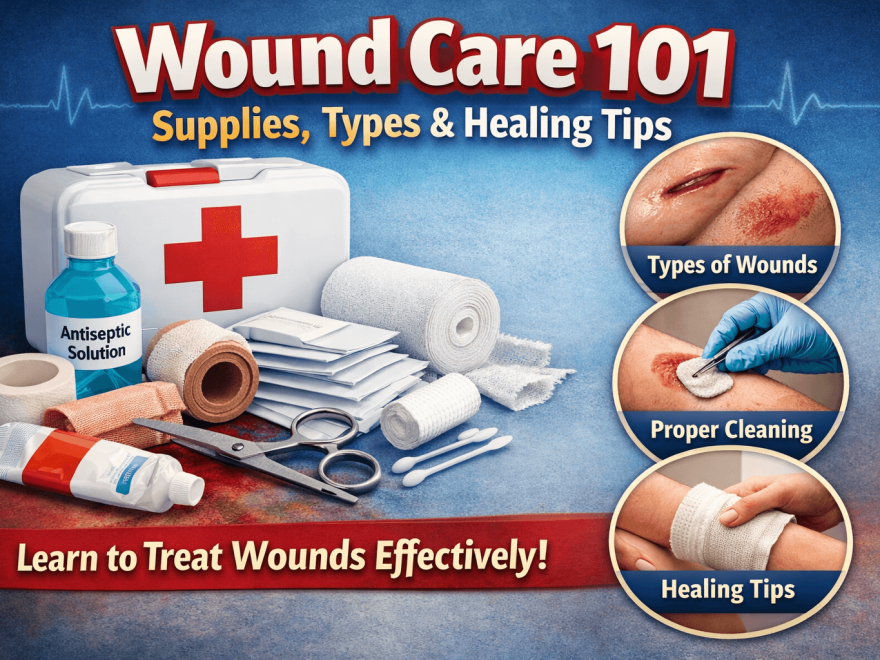
Cuts, scrapes, surgical incisions, blisters, pressure sores, and wounds show up in everyday life more often than we expect. The tricky part is not just cleaning them, but knowing what to cover them with and how to help them heal properly.
Should you use gauze, a foam dressing, or something more advanced? Does a wound really need air or moisture? The truth is, the right wound care supplies can make healing faster, easier, and less painful.
In this guide, we will break down the basics in simple terms so you can feel confident handling common wounds at home.
What makes a wound heal (or not)?
Wounds need moisture, not soaking wet, not bone dry. They need protection from bacteria. And they need to be left alone enough to do their thing. Wounds heal faster in a moist environment. Modern wound dressings work with your body, not against it.
Do I really need different types of wound dressings?
Yes. You wouldn’t wear flip-flops to shovel snow; same goes for with wound care. A paper cut needs something totally different than a post-surgery incision or a pressure ulcer. Using the wrong dressing won’t necessarily hurt you, but it definitely won’t help either. There are literally thousands of wound care supplies out there, which is overwhelming. But once you understand the main categories, it gets easier.
What are the basic types of wound care supplies?
- Gauze: Plain gauze is inexpensive and versatile. Great for covering cuts, absorbing drainage, or applying ointments. But it can dry out and stick to wounds, which hurts and can damage healing tissue. Use it for basic cuts and scrapes.
- Foam Dressings: Made from soft polyurethane, foam dressings absorb tons of fluid while keeping wounds moist. They’re cushiony and don’t stick to the wound. Perfect for post-surgical incisions, pressure ulcers, and anything that produces drainage.
- Hydrocolloid Bandages: These thick, flexible bandages form a gel when they hit wound fluid. They’re waterproof and great for blisters and shallow wounds. Don’t use it on infected wounds or if you have diabetes without asking your doctor.
- Transparent Film Dressings: Thin, clear, and sticky. You can monitor wounds without removing the dressing. Perfect for minor cuts or IV sites. Not absorbent, so skip these for draining wounds.
- Alginate Dressings: Made from seaweed, these absorb massive amounts of fluid and turn into a gel. Some have silver for infection protection. These are for seriously wet wounds, pressure ulcers, and diabetic ulcers. You’ll need a secondary dressing to hold them in place.
- Hydrogel Dressings: Hydrogels add moisture to dry wounds. Mostly water in gel form, sometimes with cooling effects. Use for dry wounds, burns, and radiation damage. Not for wet wounds.
What wound care supplies should I actually buy?
Good gauze pads, medical tape that doesn’t destroy skin, adhesive bandages in various sizes, antibiotic ointment, and saline solution for cleaning. Add a few foam dressings and hydrocolloid bandages; those two handle most moderate wounds.
If you’re managing chronic wounds or recovering from surgery, your doctor will give specific instructions. That’s when you might need specialized supplies. Medical Supply Group stocks professional-grade wound care supplies that actually work.
Quick guide: which dressing when?
| Situation | What to Use | Notes |
| Minor cut | Clean wound, apply antibiotic ointment, cover with a regular adhesive bandage | Change daily or if dirty or wet |
| Really wet wound | Foam dressing or alginate dressing | Designed to absorb heavy drainage |
| Dry wound | Hydrogel dressing | Adds moisture to support healing |
| Shallow wound needing protection | Hydrocolloid bandage or transparent film dressing | Protects wound and maintains moist environment |
| Deep wound | Seek professional medical help | Deep wounds may require proper packing and clinical care |
When should I change wound dressings?
Depends entirely on the type. Some dressings can stay on for several days. Others need daily changes. Change it if it’s soaked through. Change it if it’s dirty or starts peeling off. Change it if the wound looks worse or smells bad. Follow the instructions on the package, and when in doubt, ask your doctor.
Final words
Wound care doesn’t have to be mysterious or scary. Having basic wound care supplies on hand and knowing roughly what each type does puts you way ahead of most people. You’re not going to become a wound care specialist from one article, but you’ll be ready for normal life stuff.
If you are looking for reliable, professional-grade wound care supplies, Medical Supply Group offers quality options you can trust. Explore the right products for your needs and make your home care kit ready before you actually need it.
FAQs
What are the most essential wound care supplies to keep at home?
Sterile gauze pads, medical tape, adhesive bandages, antibiotic ointment, saline solution, and a few foam or hydrocolloid bandages. Add scissors, tweezers, and disposable gloves for a complete kit.
How do I choose between gauze and advanced wound dressings?
Use gauze for simple wounds with minimal drainage. Choose advanced dressings like foam or hydrocolloids when you need better absorption or moisture control. Advanced options cost more but reduce total dressing changes.
Can I shower with wound dressings on?
Waterproof dressings like hydrocolloids and some transparent films handle showering. Regular gauze gets soggy and needs changing. When unsure, cover with plastic wrap and tape.
How often should I change wound dressings?
Change when saturated, dirty, loose, or per product instructions. Gauze needs daily changes. Foam can last 3-5 days. Hydrocolloids might last a week. Always change if you notice infection signs.
When should I use silver wound dressings?
For wounds at high infection risk such as diabetic ulcers, surgical wounds, and chronic wounds that are not healing well. They need a doctor’s recommendation. Insurance often requires infection documentation for coverage.
Do different wound types need different supplies?
Absolutely. Surgical incisions differ from pressure ulcers. Burns need different care than diabetic foot ulcers. Wound depth, drainage, location, and healing stage determine which wound care supplies work best.