
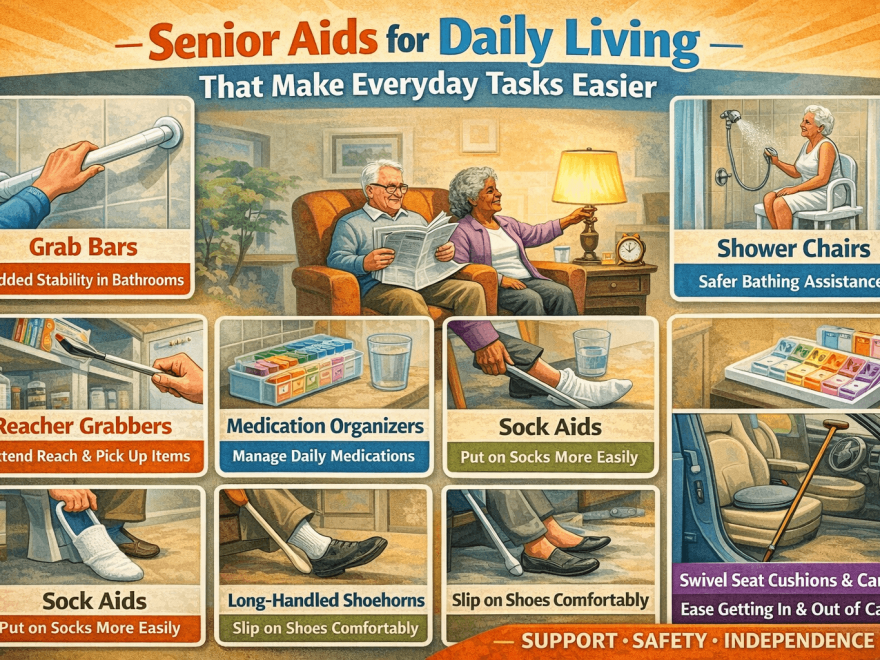
Getting older does not mean giving up everyday independence, but it does mean some tasks may take more effort than they used to. Opening a tight jar, buttoning a shirt, bending to put on socks, or stepping safely into the shower can slowly become frustrating or even risky.
These small challenges add up and can affect confidence over time. Senior aids for daily living are designed to make these everyday tasks easier and safer. They are simple, practical tools that support changing strength, balance, flexibility, and vision.
With the right aids in place, older adults can continue cooking, dressing, bathing, and managing medications with greater comfort and control. This blog explores helpful solutions that restore confidence and make daily routines feel manageable again.
What are senior aids for daily living?
Aids for daily living are tools that compensate for age-related physical changes. These adaptive daily living tools address limited dexterity, reduced strength, decreased flexibility, and mobility restrictions, enabling seniors to perform routine tasks safely and independently while maintaining dignity and self-sufficiency.
How do I know which daily living aids my elderly parents need?
Observe which tasks cause frustration, avoidance, or safety concerns. Notice if they skip meals because cooking is too difficult, wear only slip-on shoes because laces are impossible, or avoid showers due to fear of falling.
Ask directly about daily struggles, many seniors don’t mention difficulties unless asked. Watch for workarounds like sitting on the floor to put on shoes or using dangerous substitutes like chairs for reaching high items.
Start with aids addressing safety risks first, bathroom safety, and fall prevention. Then tackle tasks that limit independence or cause the most frustration.
Essential senior aids to support independent daily living
Elder Shoppe offers a carefully selected range of independent living aids designed to restore independence and make everyday activities manageable again. Here’s what actually helps.
#1 Aids for reading & writing
Vision changes and hand tremors shouldn’t stop you from reading the morning paper or signing important documents. Reading aids include magnifiers with built-in LED lights that make small print readable again, medication labels, menus, bills, and even crossword puzzles become accessible.
Handheld versions work great for spot-checking, while stand magnifiers free up both hands for writing or eating while you read. For writing, the struggle is real when arthritis makes gripping a pen painful. Foam grips slip over standard pens and pencils, transforming thin writing instruments into comfortable tools you can actually hold without pain.
Some people find spring-loaded scissors helpful for opening mail, since regular scissors require too much hand strength. These small adaptations mean you can still handle your own correspondence and paperwork without asking for help every time.
#2 Aids for caregivers
Caregiving is physically demanding work. Slide sheets make repositioning someone in bed much easier on everyone involved. Instead of lifting and straining, the slippery material lets you slide them into a better position with minimal effort. Caregiver aids aren’t just about making the job easier; they’re about making it sustainable so you don’t get injured yourself.
#3 Reachers
Drop something on the floor? Need an item from a high shelf? Reachers solve both problems. These simple grabber tools extend your reach by 2 to 3 feet, eliminating the need to bend over (risky for those with balance issues) or climb on stools (even riskier).
The ones with magnetic tips pick up small metal objects like dropped keys or coins. Rotating heads let you grab items at odd angles. Some have trigger grips that work for weak hands, while others feature easy-squeeze handles.
#4 Personal health management
Missing medications causes serious health problems, but remembering multiple pills at different times is genuinely difficult. Automatic medication reminders and pill dispensers solve this. These devices alert you with beeps or lights when it’s time for medication, then dispense the correct dose.
Some models lock, preventing accidental double-dosing. Others connect to smartphone apps that notify family members if doses are missed. For people managing several prescriptions daily, these are the essential health tools that prevent hospital visits from medication errors.
#5 General household aids
The kitchen defeats a lot of people. Tight jar lids become impossible when arthritis affects your grip. That’s where textured grip jars and bottle openers come in. Rubber surfaces provide friction that hands alone can’t manage anymore. Some mount under cabinets for leverage, others are handheld.
Multi-purpose cylindrical foam tubing is more versatile than it sounds. Slide it over tool handles, kitchen utensil handles, toothbrush handles, anything that’s too thin or hard to grip comfortably. It instantly creates a soft, wider grip that’s easier to hold and control. One piece of tubing can improve multiple items around your house.
Slip-on built-up utensil handles serve the same purpose for eating. They slide over regular forks, spoons, and knives, transforming them into adaptive utensils without buying entirely new silverware. These aren’t complicated medical devices. They’re practical solutions to common frustrations.
Final thoughts
Independence doesn’t have to fade with age. The right aids make daily tasks manageable again, restoring confidence one small solution at a time. Whether you need a reacher, a jar opener, or a medication reminder, these tools help you live life on your own terms.
Explore ElderShoppe’s complete selection of daily living aids and find the solutions that work for you.
FAQs
What are the best assistive devices for seniors?
Reachers for picking up items, shower chairs for safe bathing, jar openers for arthritis, walkers for mobility support, and automatic pill dispensers for medication management. Start with tools that address safety concerns first.
What are essential aids for daily living?
Bathroom safety equipment (grab bars, shower chairs, raised toilet seats), mobility tools (walkers, canes, reachers), dressing aids (button hooks, sock aids), kitchen helpers (jar openers, adaptive utensils), and medication organizers. These tools help with bathing, dressing, eating, moving safely, and managing medications independently.
What are examples of aids for daily living?
It includes reacher grabbers for picking up items, magnifiers for reading, jar openers for tight lids, button hooks for fastening clothes, sock aids for putting on socks without bending, shower benches for safe bathing, raised toilet seats, and pill organizers.
Where can I buy senior aids for daily living?
You can buy senior aids at specialized medical supply stores like Elder Shoppe, which offers a wide selection with expert staff, and fast delivery to help you choose the right products for your needs.