
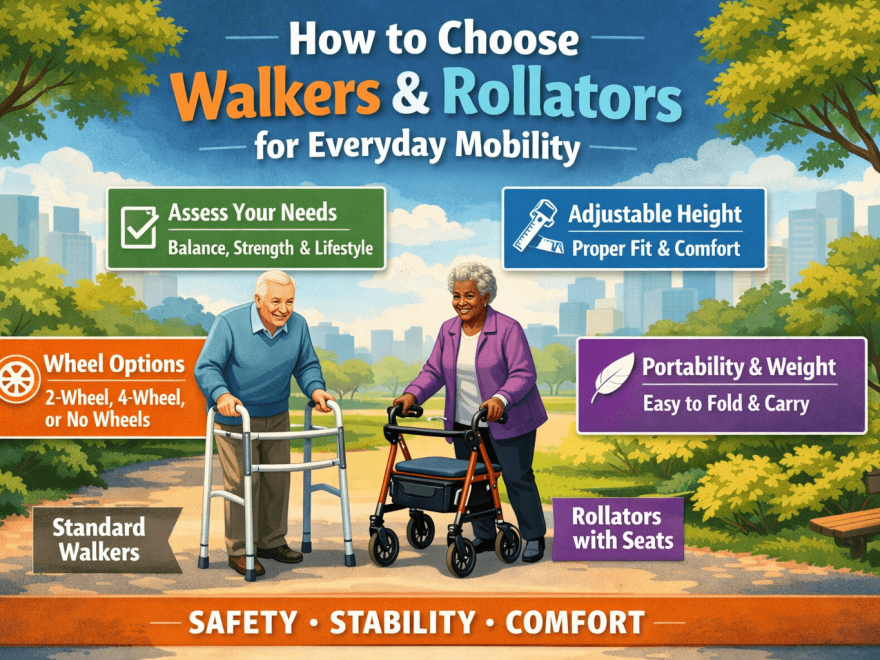
Choosing between walkers and rollators comes down to one question: how much support do you need, and how much do you want to move? Get that answer right, and you get a mobility aid that fits your life, not one that slows you down.
Whether you’re recovering from surgery, managing a balance condition, or simply need more confidence on your feet day-to-day, the right mobility equipment makes a real difference. This walker buying guide walks you through what separates a walker from a rollator, what features actually matter, and how to choose the right fit for your situation.
What is the best rollator walker for seniors?
There’s no single best rollator, but there is a best one for your needs. The right choice depends on three things. Your height, your weight, and where you’ll use it most. That said, the rollators that consistently perform well for seniors share the same core qualities:
- Stable four-wheel base for confident movement on flat surfaces
- Padded seat for rest breaks during longer walks
- Height-adjustable handles to match your exact posture
- Hand brakes that are easy to grip and lock securely
- Lightweight frame that doesn’t become a burden to lift into a car or maneuver through doorways
For seniors managing mild to moderate balance issues or fatigue, a four-wheel rollator with a seat and storage pouch is typically the most practical everyday option. It gives you the freedom to walk at your own pace, sit when you need to, and carry personal items without a separate bag.
For heavier-duty needs or users requiring more upper-body support, a two-wheel walker or standard walker with front glides may offer better stability. Rollators are easier to move but require more active balance control than a fixed walker.
What features should I look for when buying a rollator walker?
This is where most buyers go wrong; they focus on price and miss the rollator features that determine whether the product actually works for them. Here’s what matters:
Handle height and adjustability handles set too low cause you to hunch. Too high and you lose control. Proper handle height puts your wrists at a natural bend when you’re standing upright. Always check the adjustment range before buying a quality rollator to accommodate a wide height range, but not all.
Weight capacity, standard rollators typically support up to 250 to 300 lbs. If you need more, look specifically for bariatric models rated for 350 to 500 lbs. Using a rollator outside its weight rating compromises the frame and your safety.
Wheel size smaller wheels (6 inch) work well indoors on smooth surfaces. Larger wheels (8 inch or more) handle outdoor terrain, uneven pavement, and grass far better. If you’ll use it primarily outdoors or across mixed surfaces, go bigger.
Braking system loop brakes require you to squeeze to slow down, better for outdoor and incline use. Push-down brakes lock when you press down and are simpler for users with limited hand strength. Know which style works for the person using it.
Seat and storage if rest breaks matter, a padded seat is non-negotiable. A storage pouch or basket underneath adds practical everyday value and carries a phone, water bottle, or shopping items without needing a separate bag.
Frame weight if the rollator needs to go in and out of a car regularly, weight is critical. Lightweight aluminum frames in the 13 to 17 lb range are significantly easier to manage than heavier steel models, while still offering solid durability.
What are the benefits of using a rollator walker?
- More confidence, more movement: The biggest benefit is psychological as much as physical. Knowing you have stable support changes how willingly people move. Many users who previously avoided outings, walks, and social visits become far more active once they have reliable mobility equipment they trust.
- Reduced fall risk: Falls are the leading cause of injury-related hospitalization in adults over 65. A rollator provides a stable base, hand brakes for sudden stops, and a seat for moments of fatigue, all of which directly reduce fall risk during daily movement.
- Less physical strain: Rollators with proper handle height allow you to walk more upright, reducing strain on the back, hips, and shoulders that often develops when people compensate for poor balance by leaning or hunching.
- Independence at home and outside: A good rollator handles both indoor and outdoor use, meaning one piece of mobility equipment in Atlanta or anywhere else covers your full daily range without switching between products.
Final thought
The right rollator fits your height, supports your weight, matches where you’ll use it, and is easy enough to manage that you’ll actually use it every day. Those are the only criteria that matter.
At Northside Medical Supply, we carry various types of rollators to fit individual needs, including popular brands from Drive Medical, Lumex, Essential Medical, and Stander.
Come into our mobility equipment Atlanta store, and we’ll help you choose the right rollator for your mobility needs based on your height, weight, and daily routine. Browse our full selection of mobility equipment in our online store.
FAQs
What is the weight limit for most rollator walkers?
Most standard rollators support between 250 and 300 lbs. If you need more capacity, bariatric rollators are rated for 350–500 lbs and feature wider frames and reinforced components. Always check the weight rating before purchasing.
How do I maintain and clean my walker or rollator?
Wipe the frame down with a damp cloth and mild soap regularly. Check wheel bolts and brake cables monthly for looseness or wear. Lubricate any folding joints if they stiffen over time. Replace rubber hand grips and brake pads when they show visible wear.
Can I use a rollator walker indoors and outdoors?
Yes, Six-inch wheels work well on indoor floors; eight-inch or larger wheels perform better on outdoor pavement, grass, and uneven terrain. You can choose a model with larger wheels for versatility.
Are rollators better than standard walkers for everyday use?
Yes. Rollators allow a more natural walking gait, require less effort to move, and include a seat for rest for longer daily use. Standard walkers offer more upper-body support and are better suited for users who need to bear weight through their arms, such as during post-surgical recovery.