
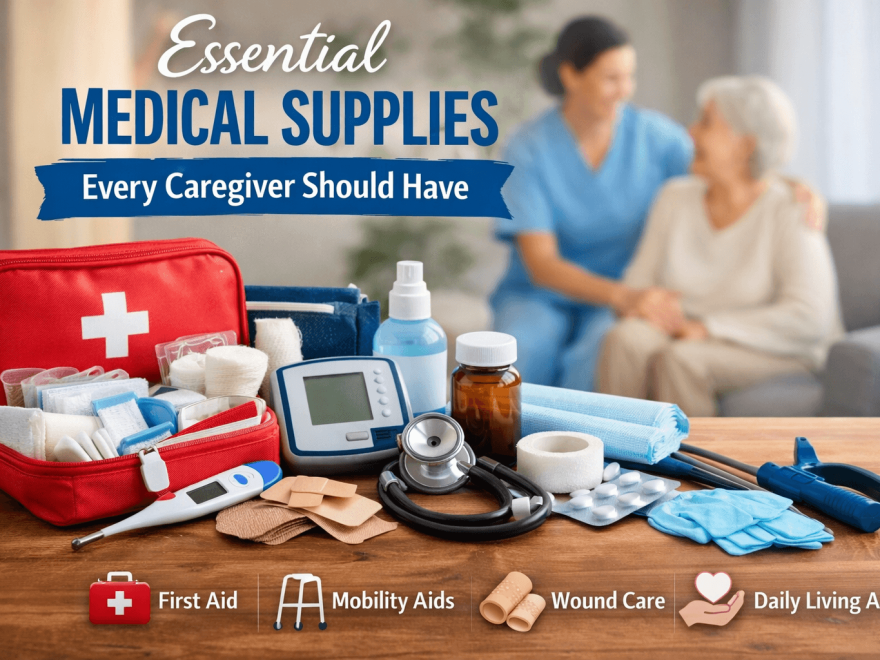
Last Tuesday, my neighbor called me in a panic. Her dad had a nosebleed that wouldn’t stop, and she couldn’t find any gauze in the house. We’ve all been there, that moment when you realize you’re missing something crucial.
Here’s the thing about caregiving: you can’t predict everything, but you can be ready for most things.
And honestly?
Having the right supplies on hand is less about being perfect and more about not losing your mind when something goes wrong at 3 AM.
Why do caregivers need medical supplies at home?
The idea of stocking up on medical supplies sounds expensive and overwhelming. But think about it this way, every time you don’t have what you need, that’s a trip to the pharmacy. Or worse, an unnecessary ER visit because you couldn’t handle something simple at home.
When you have caregiver medical supplies ready, you’re not just saving money (though you definitely are). You’re keeping your loved one comfortable. Home recovery almost always goes better than hospital stays. People heal faster in familiar surroundings. They’re more relaxed.
What personal protective equipment (PPE) do caregivers need?
This might sound clinical, but PPE isn’t just for hospitals anymore. Whether you’re changing wound dressings or helping someone to the bathroom, you need protection. For both of you.
- Start with good disposable gloves. Get nitrile if there’s any chance of latex allergies.
- Face masks matter too, especially during cold and flu season or if your loved one has a compromised immune system.
- Hand sanitizer and soap. Yeah, I know it seems obvious, but you need it everywhere. By the bed. In the bathroom. Near the kitchen. Make it impossible to skip.
- Protective aprons might seem like overkill until the first time you’re helping with a bath, and suddenly your clothes are soaked. They’re not glamorous, but they’re practical. These home care supplies protect you so you can keep showing up every single day.
What should be in a caregiver’s first aid kit?
Your first aid kit doesn’t need to look like something from a medical drama. But it should have the essentials that actually get used.
- Sterile gauze pads in different sizes
- Medical tape that doesn’t rip skin off
- Adhesive bandages for the small stuff
- Antiseptic wipes or saline solution for cleaning wounds
- Get medical scissors, actual medical ones. Tweezers for splinters
- A few instant cold packs because ice isn’t always convenient
If you’re dealing with chronic wounds or post-surgery care, you’ll need specialized supplies. Your doctor or home health nurse should give you a specific list.
What mobility equipment do elderly caregivers need?
Grab bars in the bathroom are non-negotiable. Get them professionally installed if you can; the stick-on ones aren’t worth the risk. Non-slip mats in the shower and by the bed. A sturdy walker or cane if balance is an issue.
Transfer belts help you assist with movement safely for your back and their dignity. And if wheelchairs are part of your reality, get a good cushion. Comfort matters for long-term sitting.
What medical monitoring devices should caregivers have?
You need to know what’s normal so you can spot what’s not. That’s the whole point of monitoring. A blood pressure monitor is essential. Get an automatic one that goes on the upper arm, wrist monitors that aren’t as accurate. Digital thermometers work fine for most situations, though temporal artery ones are nice if your person can’t hold something under their tongue.
Pulse oximeters are genuinely useful for anyone with heart or lung issues. They’re small, cheap, and can tell you if it’s “call the doctor” seriously or “keep an eye on it”.
If diabetes is in the picture, you already know about blood glucose monitors. But even if you’re a pro at those, consider a medication organizer with alarms. Missing doses causes more problems than people realize.
How do you manage Incontinence supplies for home care?
Adult diapers and protective underwear come in different absorbency levels. Don’t cheap out by trying to use lighter protection than needed; it costs more in the long run with extra laundry and skin problems. Bed pads are lifesavers. Get both disposable and washable ones.
Good cleansing wipes make everything easier. Look for ones made for sensitive skin without a bunch of harsh chemicals. Barrier cream prevents rashes and skin breakdown. Use it preventively, not just when problems start.
These caregiver medical supplies aren’t fun to buy, but they protect dignity and health. That matters more than awkwardness.
How should caregivers organize medications?
Medication mistakes happen when systems fail, not when people fail. Build a better system.
Pill organizers work, but only if they match your actual routine. If medications happen four times a day, get a four-times-a-day organizer. Sounds obvious, but I’ve seen people try to make weekly organizers work for complex schedules. It doesn’t.
Pill crushers and splitters for when swallowing gets difficult. Accurate measuring tools for liquids. And some kind of reminder system, whether that’s your phone, a special device, or even just sticky notes.
How do you create an emergency supply kit for caregiving?
- Keep a dedicated bin or bag with extras of everything. Not just medical supplies, copies of insurance cards, medication lists, doctor contact info, and even a change of clothes.
- Check it monthly. Swap out anything that’s expired. Restock what you’ve used. Keep it somewhere you can grab in thirty seconds.
- Make a “go bag” for appointments.
- Basic first aid, PPE, medications, wipes, and extra supplies.
Final thought
Caregiving is hard enough without adding stress about supplies. You can’t control everything about this situation, but you can control being prepared. Start with the basics. But don’t wait until you desperately need something either.
So, get every essential medical supply from the Medical Supply Group, a reputable medical equipment and supplies provider.
Check our online collection now!
FAQs
How often should I replace medical supplies in my home care kit?
Check expiration dates regularly and replace single-use items after each use. Reusable equipment should be replaced when worn, damaged, or no longer functioning properly.
Can I get insurance coverage for caregiver medical supplies?
Some items, like prescribed equipment or medically necessary supplies, may be covered by insurance with a doctor’s prescription, but everyday consumables are often out of pocket.
What’s the difference between medical-grade and consumer-grade supplies?
Medical-grade supplies meet stricter safety and performance standards for clinical use, while consumer-grade items are designed for general home use and may not meet the same regulatory requirements.
How should I properly store medical supplies at home?
Keep supplies in a clean, dry, and cool place, away from direct sunlight and moisture, and store them in clearly labeled containers for quick and safe access.
What PPE do family caregivers really need?
Basic PPE usually includes disposable gloves, face masks, hand sanitizer, and sometimes protective gowns, depending on the level of care and risk of exposure.